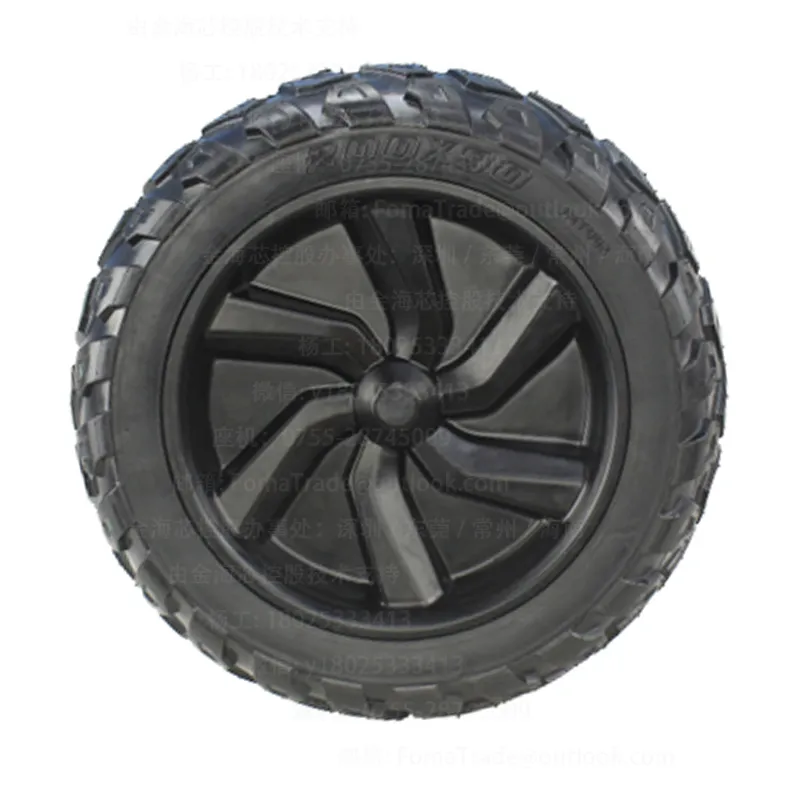
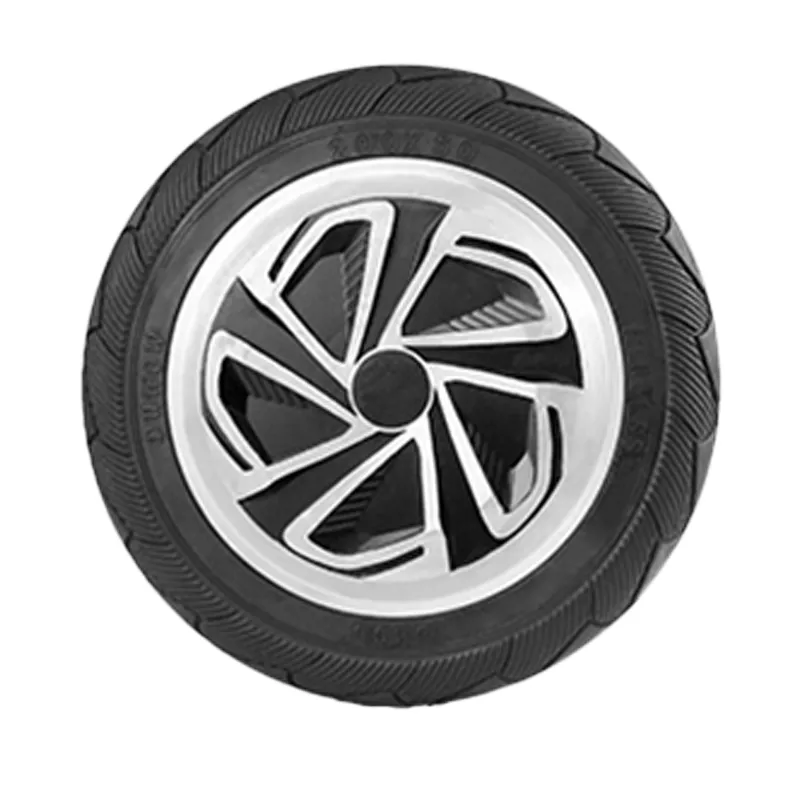
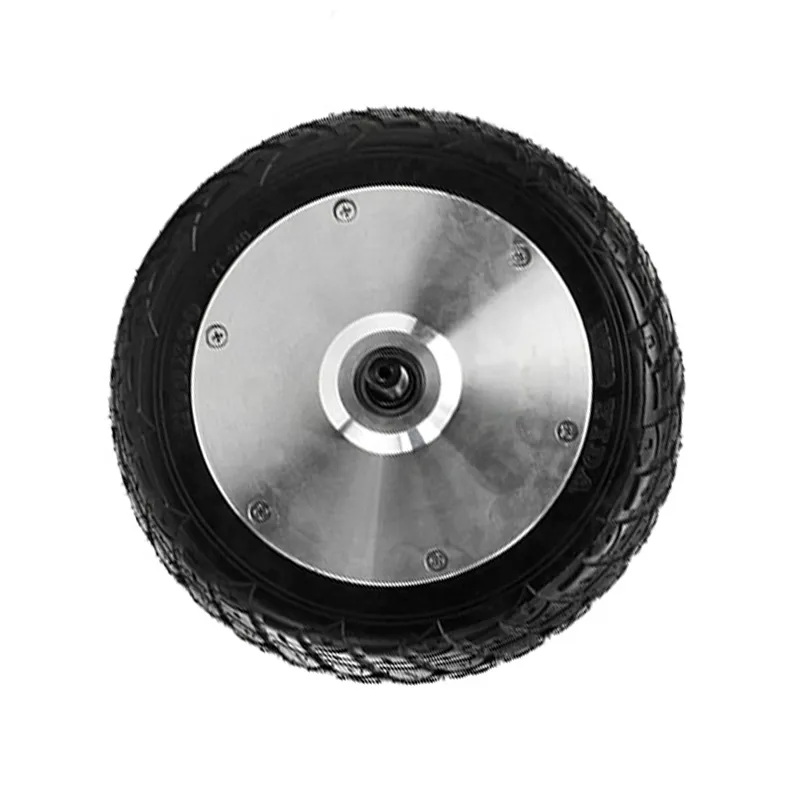
Brushless hub motors place the motor directly inside, or closely integrated with, the wheel assembly. This compact drive approach can help equipment manufacturers simplify low-voltage power system layouts while supporting efficient, responsive mobility functions. For applications where installation space, mechanical complexity, and routine service access matter, the hub motor architecture offers a practical alternative to conventional motor-and-transmission arrangements.
Shenzhen Jinhaixin Holdings Co., Ltd. designs, develops, customizes, manufactures, and supplies low-voltage three-electric-system products, including brushless hub motors, drive controllers, and energy battery packs. The company works with B2B customers seeking coordinated power solutions for varied equipment requirements.
A brushless hub motor combines the driving function with the wheel position. Rather than transferring power from a centrally mounted motor through additional mechanical components, the motor drives at the wheel. This structure can reduce the need for separate transmission elements and can give designers greater flexibility when arranging batteries, controllers, frames, cargo areas, or other functional parts of the equipment.
The motor is integrated at the wheel location, supporting a more compact drive arrangement for equipment with limited installation space.
Fewer external transmission components may help simplify system layout and reduce the number of mechanical interfaces to be considered.
The available central space can be used according to application needs, including battery placement, structural design, and functional integration.
Brushless hub motors use electronic commutation with a compatible drive controller. In a low-voltage power system, the interaction between motor, controller, and battery pack is important to overall operating behavior. A properly matched configuration helps manufacturers address starting response, speed regulation, load conditions, energy use, and protection requirements within the boundaries of the intended application.
A hub motor should be evaluated as part of a complete low-voltage power system rather than as an isolated component. The motor provides wheel-end drive output; the controller manages electrical operation; and the battery pack supplies energy. Coordinating these elements helps align the system with the equipment’s expected operating conditions.
| System element | Primary role | Key integration consideration |
|---|---|---|
| Brushless hub motor | Provides drive output directly at the wheel. | Wheel size, load demand, mounting structure, and intended duty conditions. |
| Drive controller | Controls motor operation and electrical response. | Electrical compatibility, control strategy, wiring, and protection needs. |
| Energy battery pack | Supplies power to the drive system. | Voltage matching, capacity planning, installation space, and operating environment. |
The value of a brushless hub motor is closely linked to the needs of the final equipment. It can be considered for low-voltage mobility and powered equipment platforms where a compact drive architecture, wheel-end power delivery, and configurable system integration are relevant. The appropriate solution depends on the vehicle or equipment structure, target load, speed range, operating surface, duty cycle, electrical system, and applicable requirements.
Selection principle: Motor performance should be assessed together with the complete application context. Matching the hub motor to the controller, battery pack, wheel assembly, and mechanical structure is essential for a coherent low-voltage power solution.
Shenzhen Jinhaixin Holdings supports customers with brushless hub motors and related drive-system components for low-voltage applications. By considering motor integration alongside controller and energy battery pack requirements, equipment manufacturers can develop configurations that are more closely aligned with their platform design and operating objectives.
 Shenzhen Jinhaixin Holdings
brushless hub motor procurement risks
energy battery pack sourcing
motor controller supplier selection
quality validation for electric drive systems
Shenzhen Jinhaixin Holdings Co., Ltd
brushless hub motor selection
drive controller
system compatibility
customization requirements
Shenzhen Jinhaixin Holdings
industrial motor selection
motor size matching
space-constrained motor solution
motor power and space relationship
Hub motor
Brushless hub motor
High-performance hub motor
Customized motor solutions
WINAMICS
Shenzhen Jinhaixin Holdings
custom selection
low-voltage three-electric system
sample validation
B2B procurement
Shenzhen Jinhaixin Holdings
brushless hub motor procurement risks
energy battery pack sourcing
motor controller supplier selection
quality validation for electric drive systems
Shenzhen Jinhaixin Holdings Co., Ltd
brushless hub motor selection
drive controller
system compatibility
customization requirements
Shenzhen Jinhaixin Holdings
industrial motor selection
motor size matching
space-constrained motor solution
motor power and space relationship
Hub motor
Brushless hub motor
High-performance hub motor
Customized motor solutions
WINAMICS
Shenzhen Jinhaixin Holdings
custom selection
low-voltage three-electric system
sample validation
B2B procurement





.png?x-oss-process=image/resize,h_100,m_lfit/format,webp)
.png?x-oss-process=image/resize,h_100,m_lfit/format,webp)

.png?x-oss-process=image/resize,h_100,m_lfit/format,webp)

.png?x-oss-process=image/resize,h_800,m_lfit/format,webp)