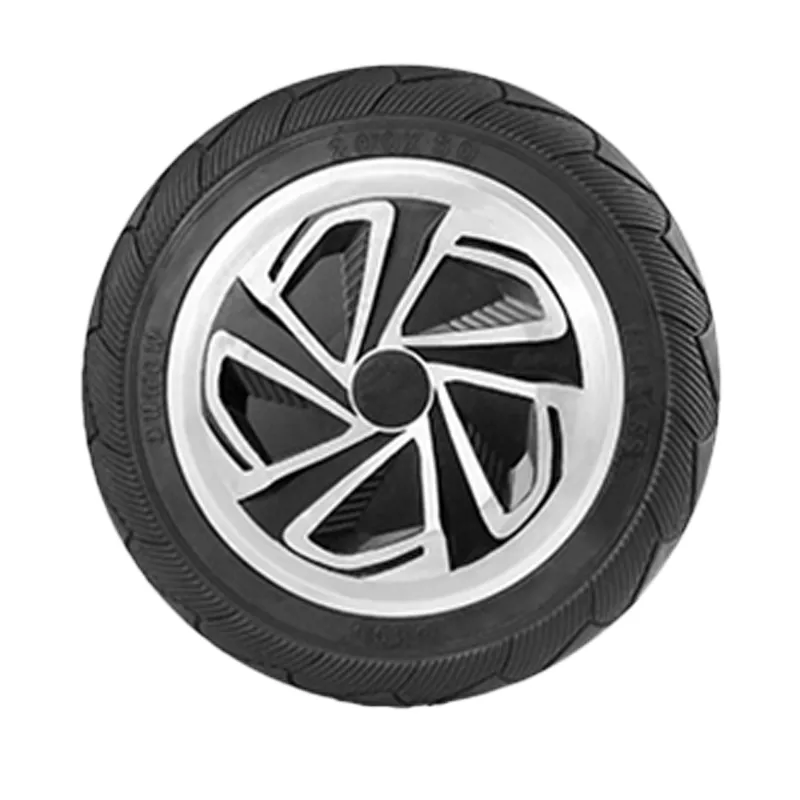
For low-speed wheeled equipment, selecting a brushless hub motor is not simply a matter of choosing a higher power rating. The motor’s power, rated speed and torque need to work together with the vehicle load, wheel diameter, target travel speed, grade requirement and real operating conditions. A balanced selection helps equipment start reliably, run smoothly at low speed and maintain suitable performance during continuous operation.
WINAMICS supports OEM and ODM equipment projects with brushless hub motor selection, motor and controller matching, prototype testing and customized electric drive solutions for applications such as electric carts, trolleys, AGVs, mobile robots, amusement vehicles, wheelchairs and specialized mobile equipment.
A low-speed vehicle may require high starting force even when its target speed is modest. This is especially relevant for equipment that carries loads, uses larger wheels, travels on uneven ground, starts and stops frequently, or must climb grades. The most reliable hub motor selection begins with a clear description of the application rather than a single motor parameter.
Consider the vehicle weight, payload and any changing load conditions. Total moving mass directly affects required starting and climbing torque.
Wheel size links motor rotational speed to vehicle speed. A larger wheel generally needs more wheel torque to produce the same driving force.
Slopes, ramps, floor condition, rolling resistance and outdoor terrain can substantially change the torque demand.
Continuous running time, stop-start frequency, ambient conditions and loading duration affect motor heating and controller requirements.
For a direct-drive brushless hub motor, these parameters should be evaluated as one system. Rated speed defines the intended motor operating range, torque provides the rotational force at the wheel, and power represents the rate at which the motor can deliver mechanical work. Selecting one value without checking the others can lead to poor starting performance, unsuitable travel speed or excessive temperature rise.
| Selection parameter | What it influences | What to verify |
|---|---|---|
| Rated speed | Vehicle travel speed at the selected wheel diameter | Target speed, wheel circumference, voltage and speed-control range |
| Rated torque | Steady driving ability under normal load | Vehicle mass, rolling resistance, number of drive wheels and operating surface |
| Starting and climbing torque | Launch, acceleration and gradeability | Maximum load, slope, start-stop frequency and controller current capability |
| Motor power | Ability to sustain the required torque at the intended speed | Continuous duty, thermal conditions, voltage and expected load profile |
A hub motor rotates with the wheel, so motor speed is directly related to wheel diameter and target vehicle speed. For the same target travel speed, a smaller wheel requires a higher motor rotational speed, while a larger wheel requires a lower rotational speed. Voltage and controller settings also affect the usable speed range.
Selection note: Do not choose rated speed based only on an unloaded vehicle. Check the desired speed at the expected operating load, and consider whether the equipment needs controlled low-speed movement, forward and reverse operation, or different speed modes.
For applications such as AGVs, service robots, electric trolleys and material handling carts, stable low-speed control may be as important as maximum vehicle speed. In these cases, motor selection should be coordinated with the controller and the intended control method.
Low-speed wheeled equipment often needs torque first: enough torque to overcome rolling resistance, start from rest, move the required load and climb the expected grade. A higher power motor is not automatically the correct answer if its speed range, wheel size, controller current or installation structure does not match the vehicle.
A properly selected low-speed high-torque hub motor should be assessed against the complete drive condition, including the wheel, tire, axle arrangement, vehicle structure and controller current settings.
Motor power is related to torque and rotational speed. In practical equipment design, it should be selected with enough margin for the planned operating conditions, but without overlooking thermal performance, battery voltage, controller capability and mechanical integration. A motor that performs well in a brief unloaded test may not be suitable for repeated loaded operation.
Focus on loaded starts, total vehicle mass, wheel diameter, ramp use and the expected duration of continuous operation.
Consider precise low-speed control, direction changes, duty cycle, wheel traction and coordinated motor-controller behavior.
Check passenger or vehicle load, frequent starts and stops, intended speed range, steering conditions and continuous-use temperature rise.
The controller affects how a brushless hub motor starts, accelerates, reverses, regulates speed and responds under load. Motor and controller parameters should be evaluated together, particularly for low-speed high-torque applications where starting current and smooth control are important.
Selection calculations and preliminary specifications provide a starting point, but sample testing is valuable before mass production. The test plan should reflect the equipment’s intended use and identify whether the selected motor, wheel structure and controller configuration operate appropriately together.
Providing complete application information helps make motor selection more relevant to the actual vehicle. The following checklist can be used when discussing a custom hub motor or integrated electric drive solution.
WINAMICS develops brushless hub motor and motor-controller solutions around the real operating requirements of wheeled equipment. Available customization considerations can include voltage, power, rated speed, torque, wheel size, tire material, axle structure, installation dimensions, wiring interfaces, braking structure and applicable protection requirements.
For an OEM or ODM project, share the vehicle load, target speed, wheel dimensions, grade requirement, operating environment and installation layout. This provides a practical basis for motor sizing, controller matching, prototype development and performance validation before batch production.
 Shenzhen Jinhaixin Holdings Co., Ltd lawn mower tire replacement lawn mower tire maintenance heavy-duty mower tire care slope operation tire selection
WINAMICS Hub Motor Controller Matching Brushless Hub Motor Integration Motor and Controller Solution Electric Drive Wiring Interface
lawnmower hub motor IP65 waterproof lawnmower motor Short shaft motor
Shenzhen Jinhaixin Holdings camper trailer motor selection 90 mm tire width fit 100 mm dropout hub motor camper trailer hub motor
Shenzhen Jinhaixin Holdings low-voltage three-electric system customization requirement alignment sample validation batch delivery