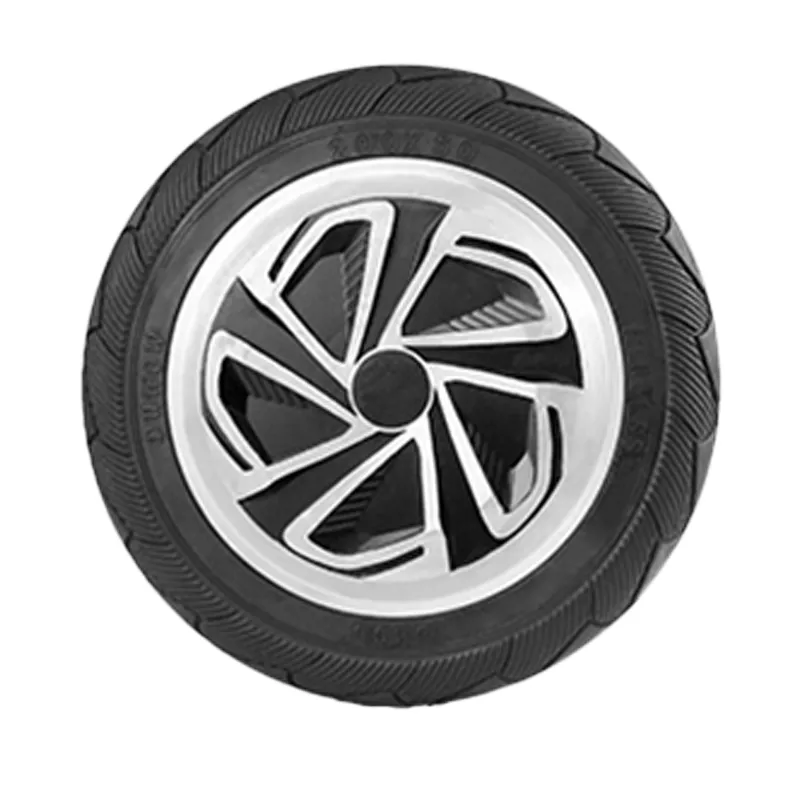
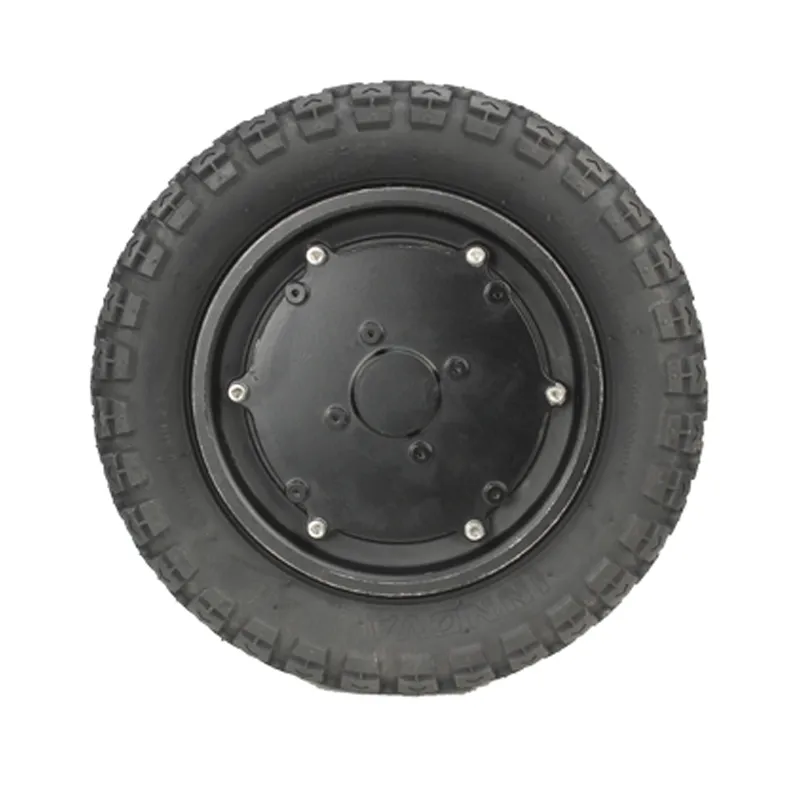
How to choose the right brushless hub motor: How to accurately interpret its performance in application environments
Brushless hub motors have become a core drive solution in many fields, including electric vehicles, industrial equipment, AGVs, robots, medical carts, and intelligent logistics systems. However, adhering to the idea that "the higher the output power, the better" can easily lead to problems such as reduced efficiency, increased heat generation, faster battery consumption, and unstable control during actual operation.
Especially when selecting high-performance brushless hub motors, it's not enough to simply compare specifications; one must also consider the vehicle or equipment's load, target speed, torque requirements, road surface, duty cycle, waterproof rating, and controller compatibility. This is why companies like WINAMICS, which offer applications-specific designs, are gaining increasing attention.
Why does the choice of hub motor determine the performance of the entire system?
Because of their direct integration within or at the center of the wheel, in-wheel motors reduce the need for power transmission components such as gearboxes, chains, and belts. This results in a simpler structure, fewer maintenance points, and higher space utilization. In fact, a well-designed brushless in-wheel motor system can reduce drive losses by approximately 10% to 20% compared to traditional mechanical drive systems.
Conversely, if a hub motor that is not suitable for the intended use is installed, problems will arise after long-term operation, even if the initial test passes. For example, a motor with insufficient rated torque will repeatedly experience overcurrent when driving on an incline; if the wheel diameter does not match the motor's KV value, actual acceleration will be sluggish even if the expected speed is high.
In other words, a good hub motor is not the "most powerful motor," but the motor that is best suited for my application .
6 things to check before choosing a hub motor
1. Total load and actual operating status
You need to consider not only the weight of the equipment itself, but also the payload, battery, and instantaneous maximum load. For example, if the AGV's total weight is 180 kg and its maximum load is 70 kg, the motor should be evaluated based on operating conditions of at least 250 kg. If the environmental slope is 8% or greater, the required torque will increase significantly compared to flat terrain.
2. Target speed and wheel diameter
Even with the same motor, increasing the wheel diameter, while improving top speed, reduces initial acceleration and climbing torque. For example, a system with 10-inch wheels and a target speed of 18 km/h requires completely different motor settings than a system with 16-inch wheels and a target speed of 25 km/h. It's easy to assume that speed matching is sufficient, but in reality, user satisfaction with acceleration response often varies much more significantly.
3. Difference between rated output power and peak output power
Many buyers judge motor performance solely by peak power, but rated power is more important in actual operation. For example, a motor with a peak power of 1500W and a rated power of 800W may have excellent instantaneous acceleration performance, but for long-term repetitive work, it should be measured by the 800W standard. For industrial or commercial mobile equipment, continuous operational stability is particularly important.
4. Torque requirements and starting performance
For in-wheel motors, performance during startup from a standstill is crucial. This is especially true for logistics robots, electric vehicles, electric wheelchairs, and low-speed, high-load mobile platforms, where a low-speed, high-torque setting is more important than maximum speed. Typically, to ensure a smooth start on a 5% incline, a torque design greater than the standard torque for flat surfaces is required.
5. Waterproof and dustproof rating and working environment
For equipment susceptible to dust and humidity, such as outdoor equipment, agricultural platforms, and delivery robots, an IP54 protection rating is typically required; for more demanding conditions, an IP65 rating is preferable. Actual durability depends not only on the motor itself but also on the cable entry points, connectors, and sensor protection structures.
6. Compatibility with controllers, batteries, and braking systems
Simply possessing a high-performance motor does not constitute a complete system. Current load and efficiency vary depending on the voltage level (24V, 36V, 48V, or 60V). Furthermore, factors such as Hall sensors, regenerative braking support, CAN communication, and electronic braking integration significantly impact the development speed of actual products. In practical applications, problems that appear to be motor defects are often actually controller matching issues.
In-wheel motor selection criteria for specific applications
| Application areas |
Key elements of recommendation |
Reference Specifications Range |
Points to note |
| AGV/AMR |
Precise control, low-speed torque, long lifespan |
24V~48V, rated power 250W~1000W |
Check the encoder, brake, and communication protocol. |
| Electric vehicles/logistics transport vehicles |
Heavy-load handling and hill start performance |
36V~60V, rated power 500W~2000W |
Ensure sufficient heat dissipation space under continuous load. |
| Medical and nursing mobile devices |
Low noise, smooth acceleration, and safe |
24V~48V, rated power 200W~800W |
Review of low vibration, braking stability and certification requirements |
| Outdoor service robots |
Waterproof, shockproof, energy-saving |
36V~48V, rated power 400W~1200W |
Perform necessary checks on IP protection rating and connector durability. |
The above data is for general reference only. Actual selection may vary depending on gross weight, number of wheels, reduction ratio, dual motor configuration, and usage time.
Reasons for choosing a brushless hub motor
The brushless structure eliminates brush wear, thereby reducing maintenance burden, improving control precision, and achieving high-efficiency operation. Under typical design standards, brushless motors can achieve efficiencies of 85% to 92% ( the specific figure depends on operating conditions), and with the same battery capacity, they can achieve longer operating time and lower heat dissipation.
It also has significant advantages in noise and vibration control. In environments where extremely quiet operation is required, such as indoor logistics equipment or medical support systems, the actual perceived noise level often has a more direct impact on purchasing decisions than the motor's performance parameters.
Manufacturers like WINAMICS, which offer application-oriented, high-performance brushless hub motors , have an advantage in reducing development risk because they can support not only standard products but also a variety of custom voltages, torques, wheel configurations, mounting structures, and braking options.
Practical considerations often overlooked when choosing a hub motor
Hot waste
If operated strictly according to rated operating conditions, overheating may occur in summer, in enclosed spaces, or during prolonged low-speed operation. Generally, adding a design margin of 15% to 30% to the expected operating values can improve stability.
Bearing and shaft loads
Since the in-wheel motor is an integral part of the wheel, bearing quality and lateral load-bearing capacity are crucial. The impact loads in the actual installation environment must be assessed, not just focusing on output power figures.
Brake options
The compatibility between electronic brakes, electromagnetic brakes, and mechanical disc brakes is directly related to safety. This must be verified in the initial stages, especially for equipment where hill-start braking is crucial.
Service life and maintenance
In practical applications, you must consider mean time between failures (MTBF), cable fatigue life, water resistance, and component supply stability. This is because in many projects, long-term operating costs are more important than initial performance.
Motor selection method and simple calculation example
For example, suppose an electric transport vehicle weighing 220 kg has a target maximum speed of 12 km/h, a gradeability of 6%, and operates for 6 hours per day. In this case, traction power on low-speed sections and heat dissipation management during continuous operation are more important than simply the maximum speed.
Under these conditions, a dual brushless hub motor configuration based on a 48V system can be considered, with a rated power of 500W to 800W per wheel. In the actual design phase, optimization is needed based on wheel diameter, deceleration, climbing frequency, and braking method. Furthermore, ensuring sufficient peak torque margin significantly improves starting stability and ride quality.
Practical tip: Instead of looking at the maximum values in the data table, first check the efficiency curve, rated continuous operating range , and temperature rise characteristics under average operating conditions . This can significantly reduce the probability of failure.
In what situations is a custom-made in-wheel motor needed?
While standard products may be sufficient for the needs of certain projects, custom designs may be more effective in the following situations.
- When specific outer diameters and thicknesses are required due to equipment size limitations, specific outer diameters and thicknesses must be used.
- When low speed and high torque are crucial
- When outdoor operations require high levels of waterproofing and dustproofing...
- When it is necessary to integrate brake, encoder and communication functions
- When specific certification, testing, or OEM structure support is required
In projects like these, manufacturing partners who can collaborate technically are more important than simple suppliers. Clearly defining requirements with the motor manufacturer early in the design process helps to significantly shorten development cycles and reduce the number of prototype modifications.
Are you looking for a brushless hub motor that's a perfect match for your equipment?
WINAMICS' high-performance brushless hub motors are widely used in a variety of industrial and mobile applications. If you need a solution that meets your specific operating conditions, including load, speed, voltage, waterproofing, braking, and control methods, please learn more today.
Learn more about WINAMICS brushless hub motor solutions
Even for the same in-wheel motor, the optimal choice can vary depending on the location, method of use, and duration of use. Therefore, the best choice does not depend on the data in the product catalog, but rather on whether it accurately reflects the actual application requirements.


.png?x-oss-process=image/resize,h_100,m_lfit/format,webp)
.png?x-oss-process=image/resize,h_100,m_lfit/format,webp)

.png?x-oss-process=image/resize,h_100,m_lfit/format,webp)