Speed and torque must be considered together when selecting a brushless direct-drive hub motor.
For flat-road vehicles, heavy-load transport equipment, and hill-climbing applications, the same rated voltage and power do not necessarily produce the same driving result. A motor configured for a higher rated speed may better support faster travel on relatively level surfaces, while a configuration with higher available torque is generally more suitable where starting force, load movement, or climbing capability is important.
WINAMICS evaluates hub motor selection around the actual vehicle duty: vehicle load, target speed, wheel size, operating gradient, supply voltage, controller strategy, and installation structure. This helps turn application requirements into a more practical electric drive configuration.
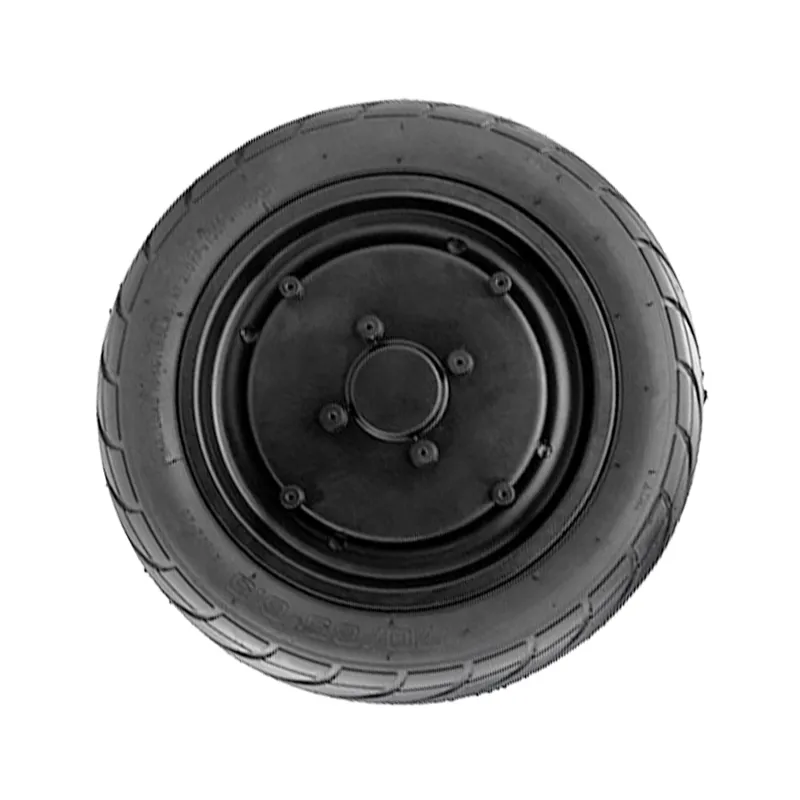
A hub motor delivers rotational force to the wheel directly. In a direct-drive arrangement, the motor is integrated with the wheel drive rather than relying on a separate reduction transmission. This makes the relationship between wheel speed, wheel diameter, motor torque, load, and road conditions especially important.
Practical selection principle: higher speed and higher torque are not interchangeable targets. The appropriate balance depends on whether the vehicle primarily needs efficient travel on flat ground, dependable movement under load, or sufficient wheel force for gradients and repeated starts.
| Application condition | Primary motor consideration | Selection focus |
|---|---|---|
| Faster operation on flat roads | Rated speed and stable operation at the intended travel speed | Match motor speed to wheel diameter, target vehicle speed, voltage, and continuous operating conditions. |
| Heavy-load transport | Starting torque and load-moving capability | Consider total vehicle mass, payload, start-stop frequency, wheel size, and required acceleration. |
| Hill climbing or ramps | Available torque under gradient and load | Assess gradient, gross weight, wheel traction, required climbing speed, and thermal conditions. |
| Mixed operating routes | A balanced speed-torque configuration | Define the most demanding duty cycle rather than selecting only for unloaded flat-road speed. |
On smooth, relatively level routes with moderate vehicle loading, the required wheel force is usually lower than in steep or heavily loaded duty. In this situation, a brushless hub motor configuration with an appropriate rated speed can help the vehicle reach its intended travel speed more naturally.
However, speed should not be selected in isolation. A higher-speed motor configuration still needs adequate torque for vehicle launch, normal rolling resistance, turns, minor surface changes, and expected payload. It must also be matched with the correct controller and voltage range.
Heavy-load carts, transport platforms, mobile equipment, and vehicles operating on ramps require more wheel force to start and maintain movement. As load increases or road gradient rises, the hub motor must overcome a greater resisting force. Maximum torque is therefore a critical reference when assessing whether a motor configuration is aligned with the application.
For hill-climbing duty, torque should be evaluated alongside the grade of the slope, total vehicle weight, desired climbing speed, wheel diameter, surface traction, and the duration of operation. A configuration that performs acceptably on a brief slope may require a different review for repeated climbing or continuous loaded operation.
A useful motor selection process begins with measurable application information. Providing complete inputs allows the motor, wheel, axle, and controller arrangement to be evaluated as one drive system.
Vehicle weight, payload, number of driven wheels, and expected loading condition.
Target speed, route surface, gradient, travel distance, and start-stop frequency.
Wheel diameter, tire type, axle structure, mounting dimensions, and available installation space.
Available voltage, battery characteristics, control method, and controller compatibility requirements.
The controller influences how a brushless hub motor starts, accelerates, reverses, and responds under load. A motor selected for a particular speed-torque requirement should be reviewed with a compatible controller based on the required voltage, current capability, control mode, and vehicle operating logic.
This is particularly relevant for applications that need controlled starts with heavy loads, repeated forward and reverse movement, or stable operation on variable terrain. The motor alone is not the complete drive solution; the wheel assembly, controller, power supply, and mechanical installation all affect the final result.
Selection assumptions should be checked against the real or intended duty cycle. Depending on the project, evaluation may include the following items:
WINAMICS supports brushless hub motor selection and development for electric carts, bumper cars, karts, mobile robots, flatbed transport vehicles, wheelchairs, lawn equipment, and other electric vehicles. Motor voltage, power, speed, torque, wheel size, axle structure, and installation dimensions can be considered according to the application.
When requesting a recommendation, share your vehicle load, target speed, wheel size, voltage, operating environment, slope requirement, and installation dimensions. These details provide the foundation for evaluating a hub motor configuration that fits flat-road travel, heavy-load transport, hill climbing, or a combination of these operating conditions.
 Shenzhen Jinhaixin Holdings Co., Ltd brushless hub motor brushless hub motor vs traditional motor hub motor structure brushless hub motor applications
Shenzhen Jinhaixin Holdings brushless hub motors brushless hub motor structure low-voltage power applications brushless hub motor advantages
lawnmower hub motor IP65 waterproof lawnmower motor Short shaft motor
WINAMICS hub motor system evaluation robot hub motor selection light electric vehicle motor matching hub motor controller battery matching
Hall sensor hub motor BLDC motor motor controller e-bike sensor