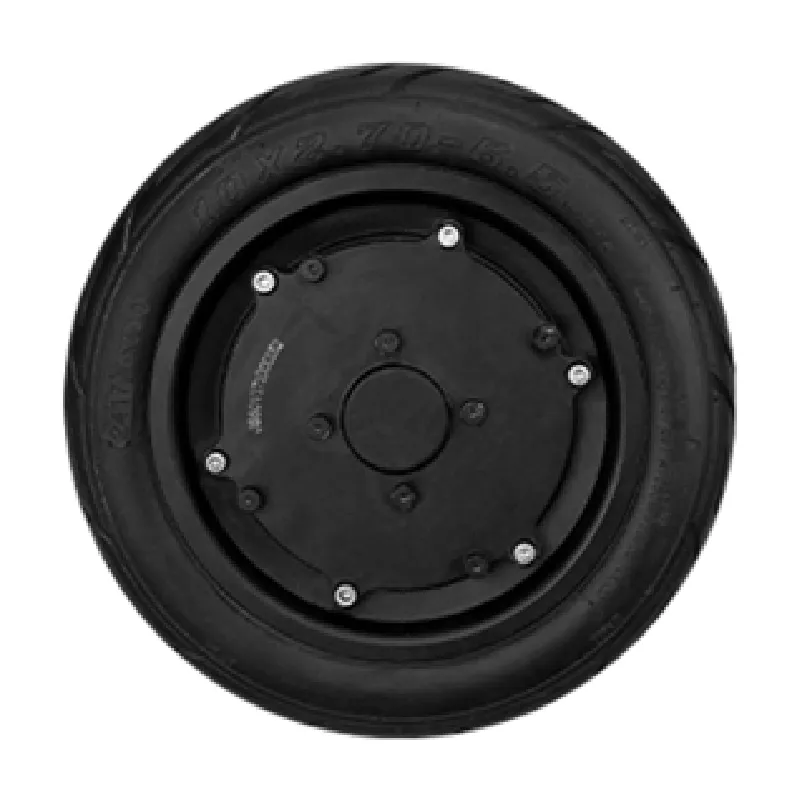
Power, speed and torque can often be customized, but they should not be selected as isolated figures. The vehicle or machine load, wheel or transmission ratio, target speed, acceleration demand, operating voltage, duty cycle, available installation space and controller capability all affect whether a motor configuration is suitable for the application.
Short answer: customization is possible when the requested performance is evaluated as a complete system. A practical configuration must balance output performance, thermal conditions, electrical limits and mechanical integration, then be confirmed through testing.
Motor performance customization is the process of assessing how a motor and controller should operate for a defined application. It may involve selecting an appropriate power range, speed range, torque characteristic, voltage platform, controller setting or mechanical interface. The goal is not simply to achieve the highest possible number for one parameter; it is to achieve the required operating behavior within realistic electrical, thermal and installation constraints.
For example, an application requiring strong low-speed starting performance may prioritize available torque and current control. An application designed for efficient movement at a defined travel speed may place greater emphasis on speed range, voltage and continuous operating conditions. These requirements can lead to different motor and controller matching decisions even when the equipment appears similar.
| Factor | Why it matters | Questions to clarify |
|---|---|---|
| Load conditions | Load determines the torque needed to start, accelerate, climb, pull or maintain motion. | What is the total moving mass? Is there a grade, friction, payload or intermittent resistance? |
| Target speed | Required speed affects motor speed, gear ratio, wheel size and voltage selection. | What speed is required under normal load, and what speed range is acceptable? |
| Acceleration and starting demand | Peak torque demand is often higher during starting and acceleration than during steady operation. | How quickly must the system respond? How often does it start and stop? |
| Operating voltage and battery system | Voltage influences speed capability, current demand and controller compatibility. | What is the nominal voltage and operating voltage range of the power source? |
| Duty cycle and environment | Continuous operation, ambient temperature and ventilation affect thermal performance. | How long does the motor run per cycle? What are the expected temperature and cooling conditions? |
| Installation constraints | Mounting dimensions, shaft arrangement and space limitations influence available options. | What mounting, shaft, enclosure and cable-routing requirements apply? |
A useful selection process begins with the application outcome rather than a single motor rating. Define what the equipment needs to do at the wheel, shaft or driven mechanism, then evaluate how that demand is transferred through the drivetrain. Power, speed and torque selection should be reviewed together because they are connected in actual operation.
A motor cannot be assessed independently from its controller when power, speed and torque requirements are customized. The controller affects current delivery, speed regulation, starting behavior, protection settings and the practical operating range of the system. A requested torque level may require appropriate current capability; a requested speed range may depend on the voltage and control configuration; and repeated high-load operation must be evaluated with thermal behavior in mind.
For custom power, speed and torque requirements, the most reliable approach is to convert the application requirement into a defined system brief, assess the relevant parameters, select a motor-controller combination, and validate it in conditions that resemble actual use. This approach helps distinguish between a theoretical target and a configuration that can be integrated into the equipment.
Recommended evaluation sequence:
Application requirements → load and mechanical review → voltage and controller review → preliminary configuration → sample or system test → adjustment based on test results.
Testing should reflect the conditions that matter to the application. Depending on the equipment, this may include loaded starting, acceleration, steady-speed operation, repeated cycling, grade or resistance simulation, temperature observation, controller response and installation clearance checks. Test results provide the basis for refining the motor performance customization and controller matching decision.
A suitable configuration is confirmed by parameter assessment and testing validation—not by a single power, speed or torque value alone.
WINAMICS can support the evaluation of customized power, speed and torque requirements based on the application, load conditions, target performance, operating voltage, installation constraints and motor controller matching. The discussion can include motor selection considerations, controller compatibility, sample development requirements and testing validation needs. This enables the configuration to be reviewed against the intended application rather than against an isolated specification.
Providing clear application details helps make the evaluation more efficient. Where available, prepare:
Not necessarily. The result depends on the complete system, including load, voltage, gearing, controller capability, duty cycle and installation conditions. A higher power rating alone does not confirm that the configuration is appropriate.
Speed and torque are related in system operation. A speed change may require review of voltage, gearing, load demand and controller settings, so both parameters should be evaluated together.
The controller influences how the motor is supplied and controlled. Its voltage, current capability and operating settings affect practical speed, torque response and protection behavior.
The most useful starting information includes the application, load conditions, target performance, supply voltage, operating cycle and installation constraints. Existing motor or controller details can also support the review.
Discuss your application with WINAMICS.
If you are evaluating custom power, speed and torque requirements, share the operating conditions and available technical details through the contact page. You may also review relevant product information and application guidance before submitting your requirements.
 WINAMICS electric material handling hub motor hub motor torque calculation hub motor speed selection brushless hub motor matching
WINAMICS low speed high torque hub motor hub motor power selection hub motor torque and speed selection brushless hub motor for wheeled equipment
Shenzhen Jinhaixin Holdings low-voltage three-electric system customization requirement alignment sample validation batch delivery
WINAMICS hub motor selection hub motor fitment assessment electric vehicle motor matching hub motor controller matching
WINAMICS hub motor system evaluation robot hub motor selection light electric vehicle motor matching hub motor controller battery matching