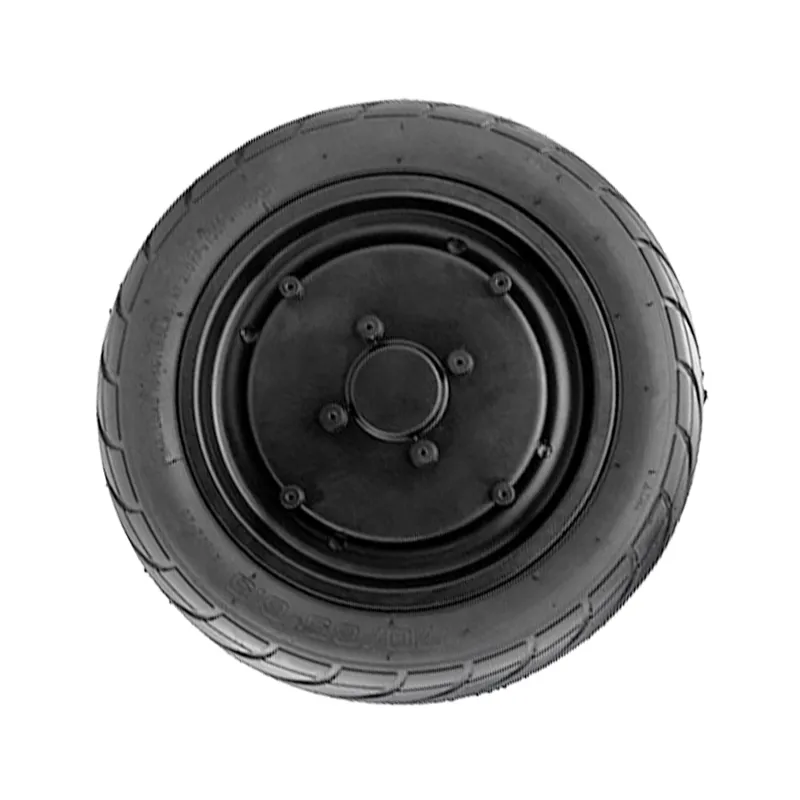
Choosing a low-voltage brushless hub motor for a children’s drift car is not just a matter of selecting a power rating. Maximum vehicle load, wheel size, target speed, acceleration needs, and expected operating time all affect the motor and torque requirements. These factors provide a basis for an initial estimate, but the complete vehicle setup should be checked and validated through testing.
Motor sizing means estimating the power and torque needed to move the vehicle as intended under its expected load and speed conditions. For a children’s drift car, the selection should account for the intended driving experience as well as the basic ability to move the vehicle.
A motor that is too small for the application may not meet the desired acceleration or speed under load. Choosing a motor based only on a high power figure, however, does not confirm that its torque, controller, voltage, mounting dimensions, and operating conditions suit the vehicle. The right choice is a system-level match, not a comparison of one specification.
Important: These relationships help organize an initial estimate. They do not replace motor and controller data, a complete vehicle assessment, or physical testing.
Validate the proposed setup on the assembled vehicle under controlled conditions. Compare measured speed and operating behavior with the defined target, and check performance under the intended load. Observe motor and controller operation during starts, acceleration, and the expected run duration. Record the test conditions so results can be compared consistently when a motor, controller, wheel, or load changes.
Testing should follow the vehicle manufacturer’s procedures and applicable safety requirements. If the results do not meet the design requirements, review the assumptions and system match before changing individual components.
WINAMICS can support motor selection, controller matching, and test validation for children’s drift car applications. Recommendations can be discussed in relation to the vehicle load, wheel size, target speed, electrical requirements, and installation constraints provided by the customer. Final suitability should be confirmed against the application details and validated on the vehicle.
To make an initial review more useful, share the information available for the application:
No. Power should be considered together with torque, operating speed, vehicle load, wheel size, controller compatibility, and the intended duty cycle.
Wheel size changes the distance traveled per revolution and the relationship between wheel torque and tractive force. Reassess speed and torque requirements whenever wheel dimensions change.
A higher target speed changes the required wheel rotation speed and can affect power demand. The result depends on the full vehicle setup and operating conditions, so it should be assessed alongside load and torque requirements.
Check the assembled vehicle against its intended load and target speed, and observe operation during starts, acceleration, and the expected run duration. Record conditions and confirm the motor-controller match against the application requirements.
For a children’s drift car, a useful motor power and torque estimate starts with the maximum load, wheel size, and target speed, then checks acceleration needs, electrical compatibility, and installation constraints. Share these application details with WINAMICS to discuss motor selection, controller matching, and a practical validation approach.
 WINAMICS brushless kart motor 8.5-inch kart motor kart motor racing stability 55 mm short-shaft motor
Shenzhen Jinhaixin Holdings brushless hub motor procurement risks energy battery pack sourcing motor controller supplier selection quality validation for electric drive systems
WINAMICS Hub Motor Controller Matching Brushless Hub Motor Integration Motor and Controller Solution Electric Drive Wiring Interface
WINAMICS low speed high torque hub motor hub motor power selection hub motor torque and speed selection brushless hub motor for wheeled equipment
WINAMICS brushless hub motor RPM hub motor speed selection wheel diameter and vehicle speed motor speed calculation