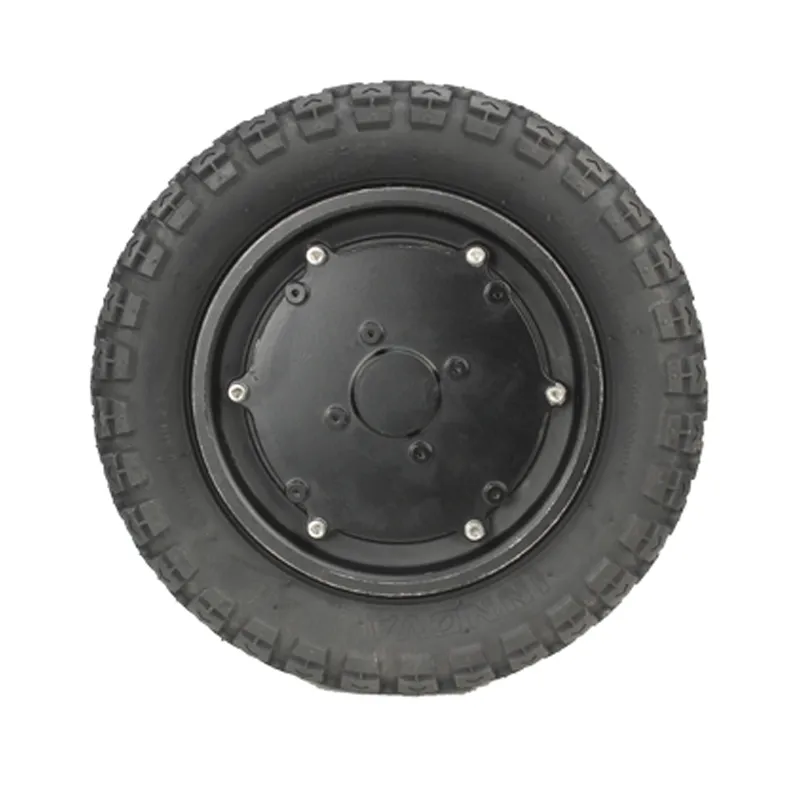
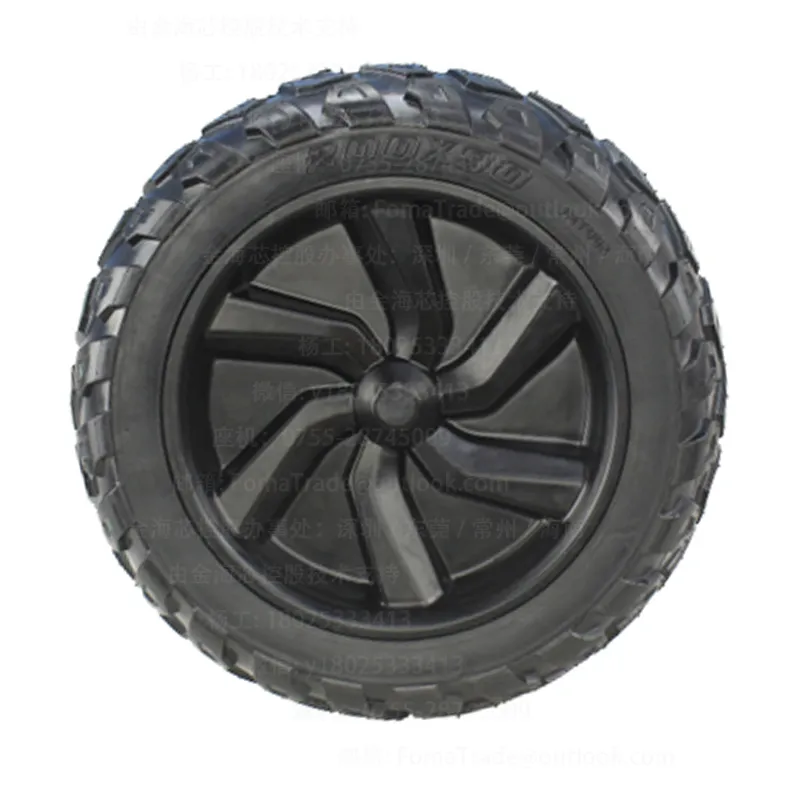
Hub motors are changing the way engineers, manufacturers, and mobility brands think about electric drive systems. Instead of sending power from a central motor through chains, belts, shafts, or gearboxes, a hub motor places the motor directly inside the wheel hub. That simple shift in architecture can dramatically improve packaging flexibility, system efficiency, torque response, and overall design freedom.
For electric scooters, e-bikes, autonomous delivery robots, AGVs, compact EV platforms, and industrial robotics, hub motors have become a practical solution for creating lighter, cleaner, and more responsive machines. Companies like WINAMICS provide high-performance brushless hub motors designed to meet the demands of modern electric mobility and robotics applications, where reliability, precision, and compact integration matter every day.
A hub motor is an electric motor integrated directly into the wheel assembly. In many designs, the stator is fixed to the axle, while the rotor is connected to the wheel shell. When current flows through the stator windings, it creates a rotating magnetic field. That magnetic field interacts with permanent magnets in the rotor, producing torque and turning the wheel itself.
Because the wheel becomes the drive output, there is often no need for external power transmission components. This direct-drive concept reduces mechanical complexity and can lower maintenance requirements. In practical terms, fewer moving parts usually mean fewer wear points, less noise, and more efficient use of space.
Most advanced hub motors used today are brushless DC motors (BLDC) or permanent magnet synchronous motors (PMSM). These motor types are known for high efficiency, precise control, and long service life. Depending on the application, hub motors can be designed for continuous power levels ranging from under 250 watts for lightweight personal mobility devices to more than 5 kilowatts for industrial or specialized electric vehicles.
The process begins with a battery or power supply delivering DC electricity to a motor controller. In electric mobility systems, common battery voltages include 24V, 36V, 48V, 60V, and 72V. For robotics and industrial systems, voltage ranges may be adapted based on torque demand, duty cycle, and control requirements.
The controller switches current through the motor windings in a precise sequence. In brushless systems, this electronic commutation replaces the physical brushes used in older motor technologies. This is one reason brushless hub motors typically offer better durability and less maintenance. Premium controllers can also support regenerative braking, field-oriented control, temperature protection, and smooth low-speed operation.
When the stator coils are energized, they generate a magnetic field that pulls and pushes against permanent magnets mounted on the rotor. As the sequence changes rapidly, the rotor turns. Because the rotor is connected directly to the wheel, the wheel rotates without an external drivetrain.
Torque is what gets the wheel moving. Hub motors are especially valued for delivering high torque at low speed, which is important for urban mobility, climbing slopes, carrying payloads, and starting from a standstill. A well-designed hub motor can produce torque response in milliseconds, improving control and ride feel.
Many hub motors use Hall sensors or encoder feedback to monitor rotor position. This helps the controller deliver accurate current timing, smoother acceleration, and stable performance under varying load conditions. In robotics, position feedback is often critical for navigation, path correction, and low-speed maneuverability.
| Component | Function | Typical Benefit |
|---|---|---|
| Stator | Contains copper windings that create the electromagnetic field | Precise torque generation |
| Rotor | Holds permanent magnets and rotates with the wheel | Direct wheel drive |
| Axle | Supports the stationary portion of the motor | Structural stability |
| Controller | Regulates power delivery and commutation | Smooth speed and torque control |
| Sensors | Detect rotor position, speed, or temperature | Higher efficiency and safer operation |
| Bearings and Housing | Support rotation and protect internal components | Long service life in demanding environments |
The market growth behind hub motor technology is not accidental. Electric mobility brands are under pressure to create products that are lighter, more efficient, easier to maintain, and faster to integrate into new platforms. Hub motors help solve all four challenges at once.
In a conventional drivetrain, energy travels from a motor to the wheel through extra mechanical components. Each extra component can introduce friction losses, noise, vibration, and maintenance needs. By contrast, a direct-drive hub motor may reach efficiency levels of around 85% to 93% depending on design, speed range, and load condition. In carefully optimized systems, peak efficiency can move even higher.
For compact electric vehicles and robotic platforms, design flexibility is another major advantage. Removing chains or gear trains can free up internal volume for batteries, payload systems, sensors, or cooling architecture. That is especially valuable in delivery robots, smart wheelchairs, agricultural robots, warehouse platforms, and last-mile mobility devices.
One of the strongest advantages is system compactness. Since the motor is built into the wheel, manufacturers can reduce the number of drivetrain components and simplify assembly. This often shortens development cycles and lowers overall system complexity.
Brushless technology eliminates physical brush wear, which can significantly extend service intervals. In fleet applications, less downtime can have a direct impact on operating efficiency. For some mobility and robot fleets, reducing one unscheduled maintenance event per unit per year can already create meaningful savings.
Direct wheel drive allows for immediate torque delivery. This matters when climbing, braking, cornering at low speed, or carrying variable loads. Responsive control also improves user confidence in personal mobility products and navigation precision in autonomous systems.
Without chain slap or gearbox noise, hub motors can run more quietly than many traditional drive arrangements. In indoor robotics, hospital equipment, campus mobility, or service robots, lower noise is more than comfort. It is part of the user experience.
Many next-generation machines need room for battery packs, AI modules, lidar, cameras, communication boards, and safety systems. Every cubic centimeter matters. A hub motor helps reclaim that valuable space.
| Feature | Hub Motor | Traditional Mid-Drive |
|---|---|---|
| Motor Position | Inside the wheel | Mounted centrally on the frame or chassis |
| Drivetrain Components | Fewer components | Requires chains, belts, shafts, or gears |
| Maintenance | Generally lower | Generally higher due to more wear parts |
| Packaging Flexibility | Excellent | Moderate |
| Low-Speed Torque Control | Very strong with proper controller tuning | Strong, depending on gearing |
| Noise Level | Typically lower | Can be higher due to transmission noise |
Hub motors are now used across a broad range of industries. Their ability to combine compactness, torque, and simplicity makes them suitable for both consumer products and demanding industrial systems.
Not all hub motors are the same. Selecting the right motor requires a careful review of the application environment, duty cycle, speed target, payload, wheel size, and controller strategy. Engineers typically compare at least the following parameters:
| Parameter | Reference Range | Why It Matters |
|---|---|---|
| Rated Power | 250W to 5000W+ | Determines sustained output capability |
| Peak Torque | 15Nm to 250Nm+ | Affects startup force, climbing, and load handling |
| Voltage | 24V to 96V | Influences power architecture and controller matching |
| Efficiency | 85% to 93% | Impacts range, heat generation, and operating cost |
| Ingress Protection | IP54 to IP67 | Important for outdoor, dusty, or wet environments |
| Continuous Duty Capability | Varies by thermal design | Critical for fleets, industrial use, and robotics |
Like any engineering solution, hub motors come with trade-offs. In some vehicle categories, adding motor mass to the wheel can increase unsprung weight, which may affect ride dynamics. Thermal management can also become a key design issue in high-load or high-speed applications, especially if the motor operates continuously in hot environments.
That said, these challenges can often be addressed through thoughtful motor design, material selection, controller calibration, wheel structure optimization, and real-world testing. High-quality suppliers pay close attention to cooling paths, magnetic circuit design, sealing, winding quality, and long-term durability under repeated load cycles.
For robotics applications, another important factor is controllability. Smooth starts, precise low-speed movement, and stable braking are often more important than top speed. That is why advanced brushless hub motors paired with intelligent control electronics are increasingly preferred in professional robotic systems.
When product teams move from concept to production, the hub motor stops being just a component and becomes a performance-defining system. Acceleration feel, climbing ability, battery efficiency, noise, reliability, and even brand reputation can all be influenced by motor quality.
A high-performance brushless hub motor should offer more than raw output. It should also deliver consistent torque, stable thermal behavior, strong sealing performance, good compatibility with controllers, and repeatable manufacturing quality. In mobility and robotics, consistency is often what separates a promising prototype from a dependable commercial product.
This is where experienced suppliers such as WINAMICS stand out. Their focus on high-performance brushless hub motors for electric mobility and robotics aligns with the needs of companies building products for real operating environments, not just showroom demonstrations.
If you are developing electric vehicles, intelligent robots, AGVs, or compact mobility platforms, the right drive system can shape everything from efficiency to user experience. Explore advanced solutions built for torque, control, and long-term reliability.
Discover WINAMICS Brushless Hub Motors Hub motor
Brushless hub motor
High-performance hub motor
Customized motor solutions
WINAMICS
Hub motor
Brushless hub motor
High-performance hub motor
Customized motor solutions
WINAMICS


.png?x-oss-process=image/resize,h_100,m_lfit/format,webp)
.png?x-oss-process=image/resize,h_100,m_lfit/format,webp)

.png?x-oss-process=image/resize,h_100,m_lfit/format,webp)