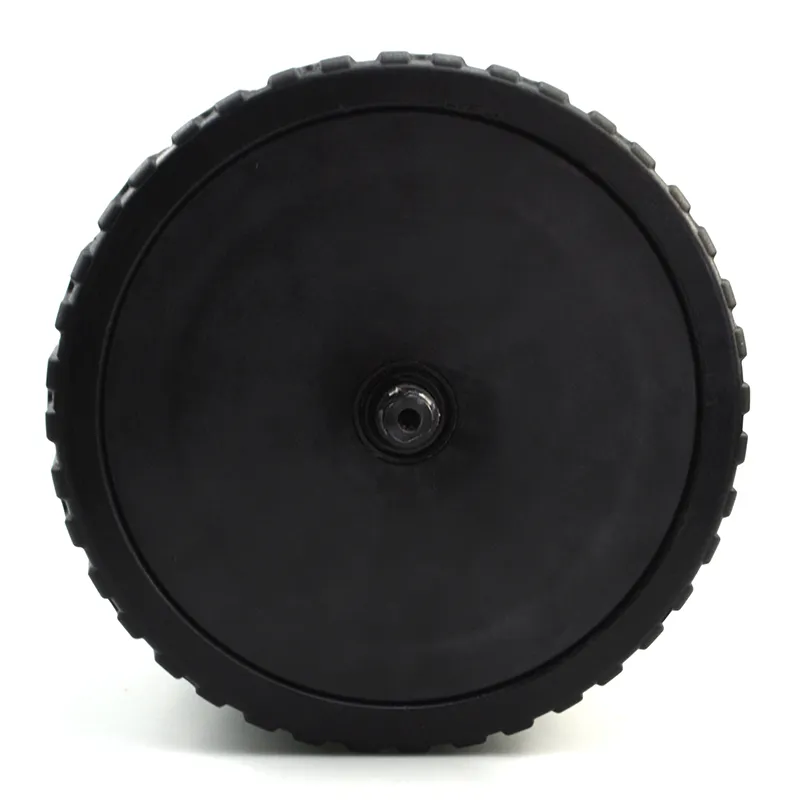
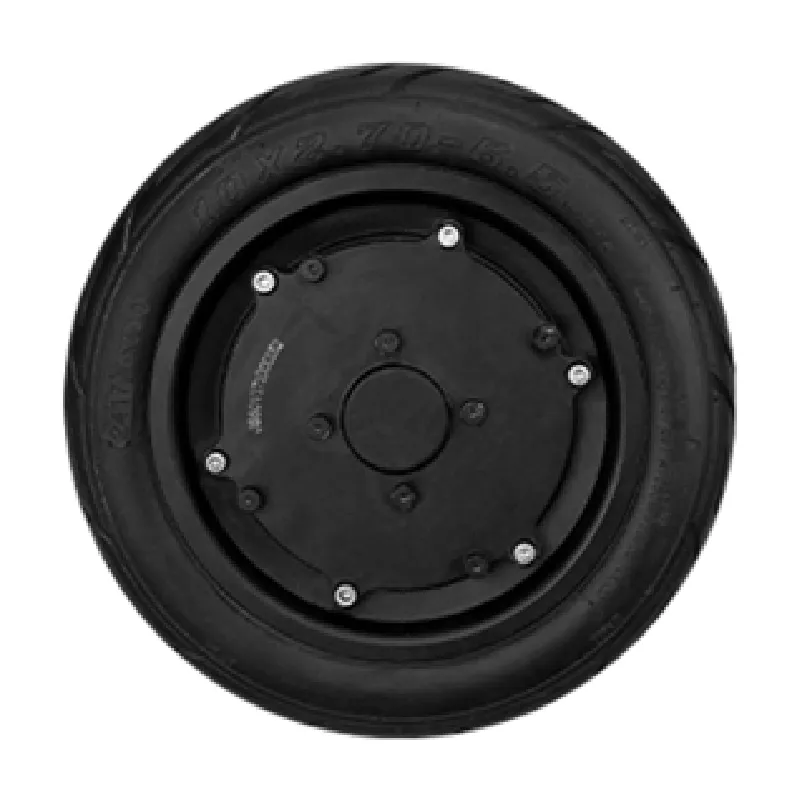
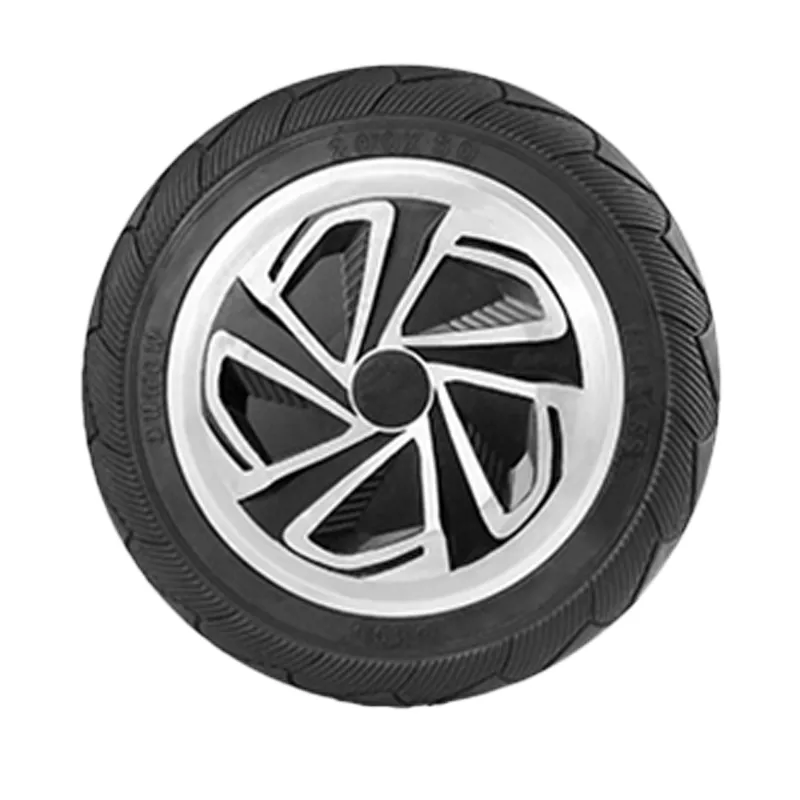
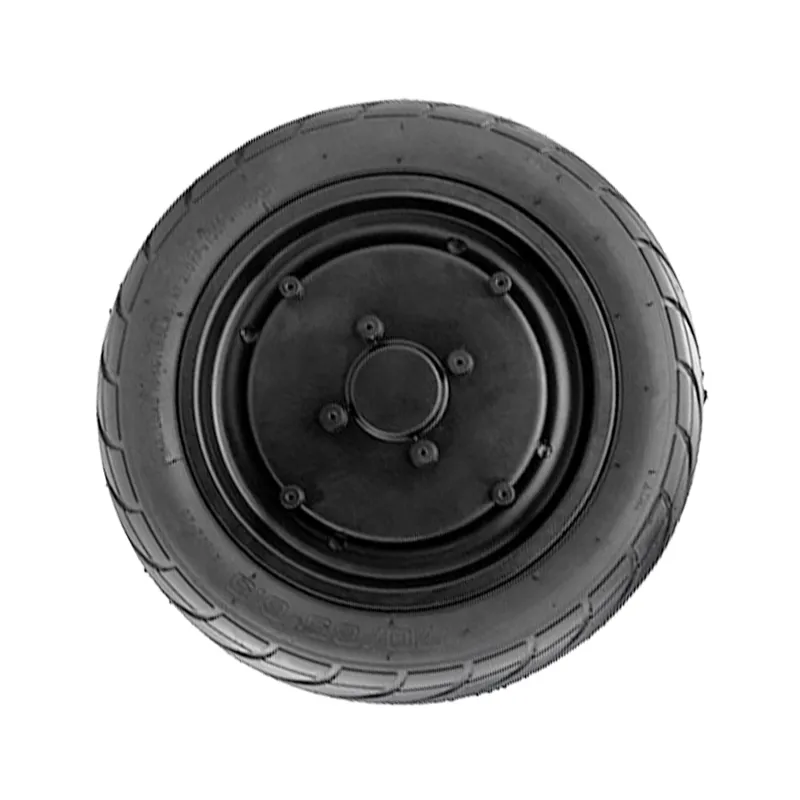
Choosing a brushless hub motor for low-voltage mobility equipment starts with the vehicle’s operating requirements, not the motor’s physical size or rated power alone. Loaded weight, target speed, wheel dimensions, terrain and time spent under load all affect whether a configuration is suitable.
The practical approach is to define the most demanding normal operating conditions, assess the motor and controller together, and confirm the choice on the equipment. A configuration that reaches the desired speed on level ground may still struggle with starts, slopes or sustained operation.
A brushless hub motor integrates the drive motor at the wheel. For equipment developers, sizing means checking whether that wheel-mounted drive can provide the required wheel speed and turning force within the available electrical and installation constraints.
No single parameter settles the choice. A larger wheel may require more wheel torque to produce the same driving force, while a higher target speed changes the required rotational speed. Added payload or steeper terrain can increase the force required at the same speed. The relevant question is whether the proposed motor and controller can meet all of those requirements at the same operating point.
For that reason, separate the requirements into typical operation and the most demanding normal condition. Check both. Peak capability may be relevant to a short start or climb, but it should not be treated as proof that the equipment can run continuously under that load.
Calculations and product specifications help narrow the options, but application testing is needed to confirm the final fit. Test with a representative load, the intended wheel and controller, and terrain that reflects actual use.
Check starting, acceleration, achieved speed, slope performance and behavior over the expected operating period. Record electrical demand and component temperature where measurement is available. If the results fall short, review the motor, controller settings and overall vehicle requirements together rather than changing one specification in isolation.
Not necessarily. The motor still needs to suit the wheel, voltage, controller, available space and actual operating duty. A higher power figure alone does not establish a suitable match.
Wheel circumference links rotational speed to travel speed, while wheel radius affects the torque needed to create driving force at the ground. Both matter when comparing configurations.
No. Payload is important, but target speed, slopes, surface conditions and operating duration also influence the required performance.
Controller limits and settings affect how the motor operates in the vehicle. Testing the intended combination provides more useful evidence than assessing either component separately.
WINAMICS can help equipment developers review brushless hub motor requirements against vehicle load, wheel dimensions, target speed, supply voltage, terrain and installation space. This provides a basis for discussing motor and controller fit and identifying the checks needed during application testing. Final suitability should be confirmed against the equipment’s actual operating conditions.
To make an initial assessment more useful, provide:
If you are evaluating a brushless hub motor for low-voltage mobility equipment, contact WINAMICS with your vehicle requirements and operating conditions. A clear application brief is the best starting point for assessing a suitable configuration and planning its validation.
 Shenzhen Jinhaixin Holdings Co., Ltd brushless hub motor brushless hub motor vs traditional motor hub motor structure brushless hub motor applications
WINAMICS hub motor selection hub motor fitment assessment electric vehicle motor matching hub motor controller matching
Jinhaixin Holdings low-voltage three-electric system matching motor controller battery compatibility B2B system selection electric powertrain stability
Shenzhen Jinhaixin Holdings low-voltage three-electric system customization B2B implementation process sample validation mass-production introduction
WINAMICS hub motor selection brushless hub motor suitability electric drive application assessment hub motor controller matching