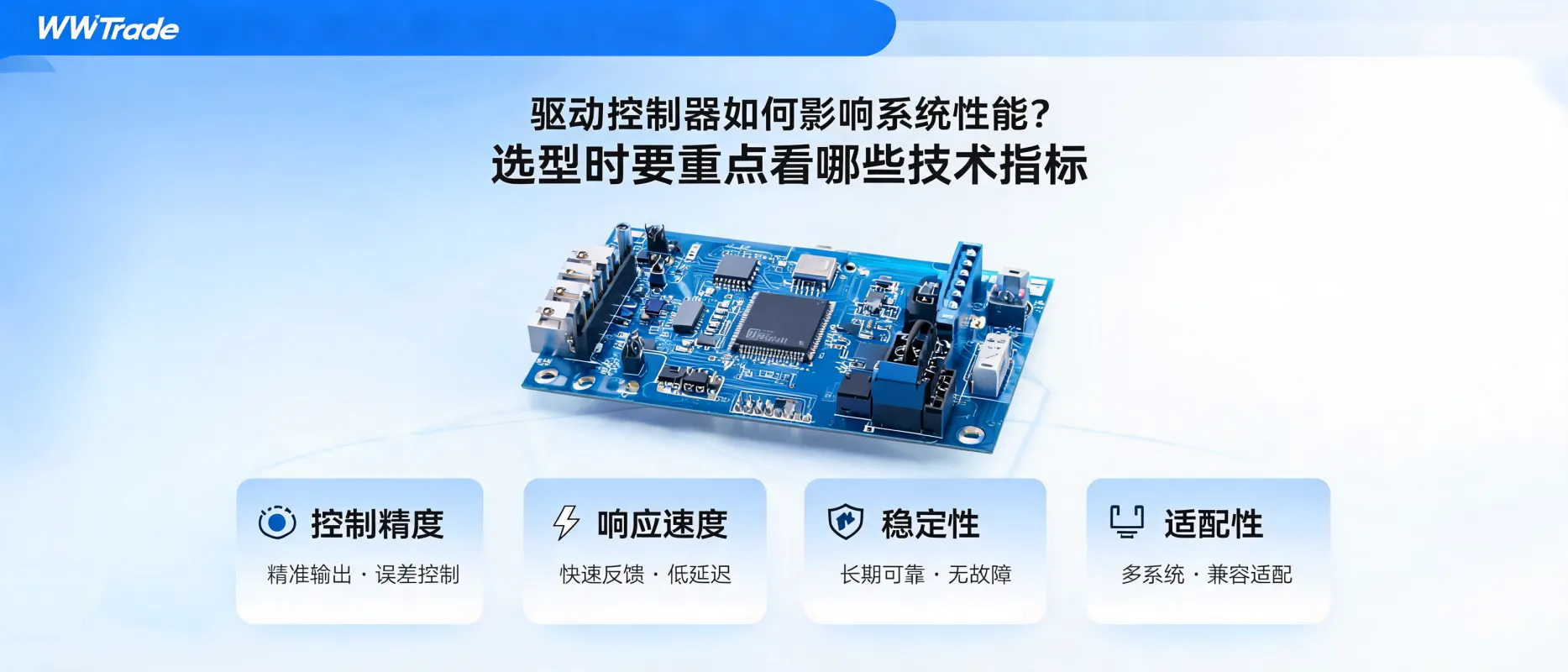
5 Risks Businesses Often Overlook When Sourcing Brushless Hub Motors and Energy Battery Packs
Shenzhen Jinhaixin Holdings Co., Ltd
2026-08-01
Pitfall Avoidance Guide
Shenzhen Jinhaixin Holdings outlines five common procurement risks for brushless hub motors, motor controllers, and energy battery packs, helping B2B buyers assess specifications, quality validation, customization, and service support.
Sourcing components for a low-voltage electric drive system involves more than comparing unit prices or reviewing a basic product list. Brushless hub motors, motor controllers, and energy battery packs operate as connected parts of one system; a gap in specifications, validation, or service planning can affect integration, operating stability, and maintenance decisions later in the project.
For B2B buyers, a structured supplier assessment helps turn broad requirements into verifiable technical and commercial criteria. Shenzhen Jinhaixin Holdings Co., Ltd. focuses on the design, development, customization, production, and sales of low-voltage electric drive components, including brushless hub motors, drive controllers, and energy battery packs. The following five risks provide a practical framework for evaluating sourcing decisions before supplier selection.
Why system-level procurement matters
A brushless hub motor delivers mechanical output, but its real-world operation depends on the controller’s control logic and electrical matching, as well as the battery pack’s voltage and energy supply characteristics. Reviewing each item independently may leave important interface questions unanswered.
A more reliable procurement process defines the intended application, confirms component compatibility, documents acceptance criteria, and clarifies the supplier’s role in customization and post-delivery support. This approach is especially relevant where operating conditions, vehicle architecture, installation space, or control requirements differ from standard configurations.
Five sourcing risks to assess before placing an order
1Specification mismatch across the electric drive system
A motor specification alone does not establish whether the full system is suitable for the intended application. Voltage range, rated operating conditions, wheel or installation dimensions, wiring interfaces, controller configuration, battery pack compatibility, and expected load conditions should be considered together. A mismatch can emerge when individual components appear suitable on paper but are not aligned as a working system.
What buyers should clarify:
- The application scenario and operating environment
- Electrical matching requirements between motor, controller, and battery pack
- Mechanical dimensions, mounting arrangement, and cable or connector interfaces
- Required documentation for the selected configuration
2Insufficient attention to stability and consistency
For business procurement, stable operation is not only a product attribute; it is also a supply and quality-management consideration. Buyers may focus on a prototype or initial sample without establishing how configuration consistency, production controls, and quality checks will be addressed across subsequent orders.
A supplier discussion should therefore extend beyond nominal specifications. Ask how the supplier manages production processes, confirms product configuration, and supports traceability or inspection expectations appropriate to the project. This helps purchasers evaluate whether the proposed supply arrangement is aligned with their quality requirements.
3Unclear customization requirements
Customization can be valuable when an application has specific mechanical, electrical, or functional requirements. However, it also creates risk if the request is communicated only in general terms. Phrases such as “custom motor” or “special battery pack” do not define the actual design boundary, approval process, or deliverable.
Before confirming a customized solution, buyers should document the requirements that affect component selection and integration. This may include installation constraints, target electrical parameters, controller functions, cable layout, enclosure expectations, and the intended use environment.
A clear customization brief helps both parties distinguish standard options from project-specific requirements and provides a more useful basis for technical review.
4Missing or incomplete quality validation
Quality validation should be defined before procurement, rather than treated as a final-stage activity. Without agreed inspection points and acceptance criteria, it can be difficult to confirm whether delivered brushless hub motors, controllers, or energy battery packs meet the project’s documented requirements.
The appropriate validation scope depends on the application and commercial agreement. Buyers should identify the specifications to be checked, the documents required for review, the sample or pre-production approval process where applicable, and how deviations will be communicated. This creates a clearer basis for supplier selection and incoming quality control.
5After-sales maintenance considerations addressed too late
Serviceability is often overlooked during initial sourcing. Yet questions about replacement components, fault information, configuration records, technical communication, and maintenance coordination can become important after deployment. These issues are easier to manage when responsibilities and communication channels are understood early.
When assessing a motor controller supplier or a battery pack sourcing partner, buyers should ask what technical information is available for the selected configuration, how product identification is managed, and how service-related inquiries are handled. The objective is not to assume every issue can be avoided, but to ensure there is a practical route for communication and resolution.
A practical procurement review checklist
| Review area |
Questions to address |
Procurement purpose |
| System compatibility |
Are the motor, controller, and battery pack specified for the same application requirements? |
Reduce interface and integration uncertainty. |
| Configuration control |
Is the selected configuration documented and identifiable? |
Support consistent ordering and communication. |
| Customization scope |
Which requirements are standard, and which require tailored design or production? |
Create a defined technical basis for the project. |
| Quality validation |
What specifications, documents, and inspection points must be confirmed? |
Align supplier delivery with buyer acceptance needs. |
| Service coordination |
How will technical inquiries, configuration records, and maintenance matters be handled? |
Improve readiness for post-delivery support. |
Build the discussion around your application requirements
A productive supplier evaluation begins with clear application information and a shared understanding of the electric drive system. Rather than selecting a brushless hub motor, motor controller, or energy battery pack in isolation, B2B purchasing teams can use the five risk areas above to guide technical discussions, quotation review, and validation planning.
With production locations in Shenzhen, Dongguan, Changzhou, and Hainan, Shenzhen Jinhaixin Holdings works with customers seeking low-voltage electric drive components and personalized configuration support. Providing the intended application, technical requirements, and integration considerations at an early stage enables a more focused assessment of suitable motor, controller, and battery pack options.


.png?x-oss-process=image/resize,h_100,m_lfit/format,webp)
.png?x-oss-process=image/resize,h_100,m_lfit/format,webp)

.png?x-oss-process=image/resize,h_100,m_lfit/format,webp)





.png?x-oss-process=image/resize,m_fill,h_800,w_800/format,webp)